Shoegaze from Indonesia: Interview with Sunlotus
- Kamola Atajanova
- Mar 18
- 9 min read

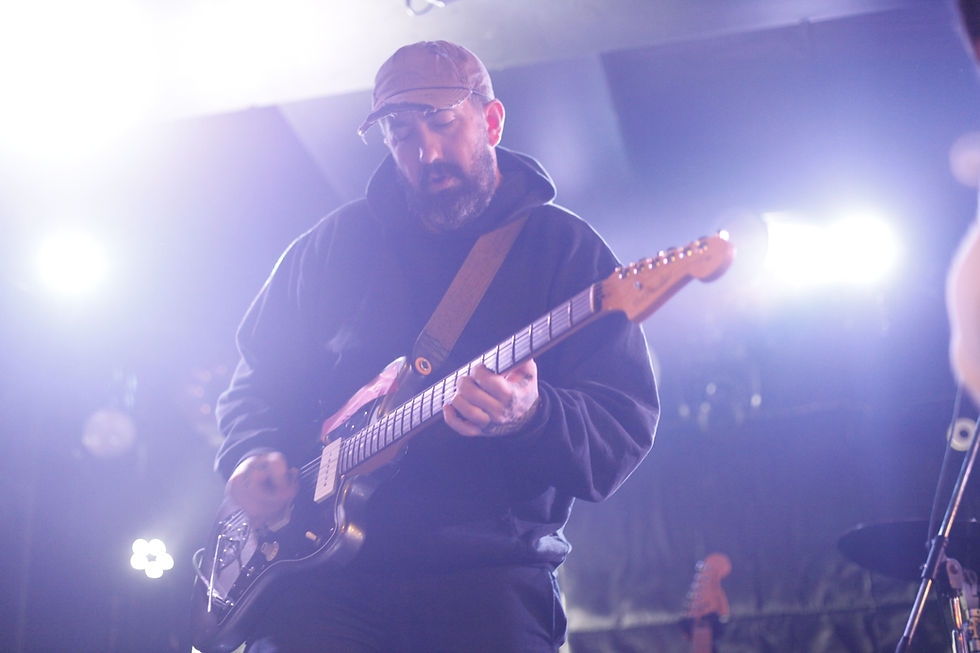
In a country of 280 million people that boasts one of the most rabid and prolific heavy music scenes on the planet, Sunlotus stands at the center of Indonesia's modern shoegaze movement. Originally formed as a studio-only experiment by active members of the local hardcore and grindcore underground, the band has since morphed into a relentless live act.

In this interview, we catch up with the band's co-founder, Made Dharma, to discuss their heavy roots, what sets Indonesian shoegaze apart from the West, the vital importance of the country's legendary cassette scene, and what it was like colliding with the hyper-online "Zoomergaze" generation while opening for TikTok sensation Wisp.
We'd love to hear about the early days. How did the band originally form and find its footing?
The band started when me (Made Dharma) and our other guitar player, Dzul Fawaid, got somewhat bored of playing power chords and decided to challenge ourselves to play something we’d never tried before. We were both previously in a couple of bands playing styles ranging from hardcore and grindcore to death metal and noise. I was already involved in a few alt bands, but for Dzul, this was his first time. He wasn’t even aware of the genre firsthand! But either way, we were always around all kinds of people in the scene. In Indonesia, most of the scenes are deeply connected to one another.
For readers in Europe or the US who are completely new to the scene, how would you define 'Indonesian shoegaze'? What makes the sound and the community over there distinct from what we hear coming out of the West?
Music-wise, I don't think there is much difference compared to the West, since this type of music was born there and is already heavily saturated with Western culture. But the shoegaze scene here has been around since 1995 or 1997, with names like Cherry Bombshell and The Milo, as far as I know. The sound has been evolving with newer acts ever since, especially with a new wave hitting the scene after bands like Nothing and DIIV toured Indonesia a couple of years back. I think them coming here played a huge part in how bands here moved toward new directions—they are the face of the shoegaze world currently, anyway.
people here are always surrounded by friends who are in other groups and scenes. In Indonesia, we have this culture called nongkrong, which basically means group hanging out.
But the influences don't stop there. As I mentioned before, people here are always surrounded by friends who are in other groups and scenes. In Indonesia, we have this culture called nongkrong, which basically means group hanging out. It is so deeply rooted in our way of living that we do it almost every day. Through it, we basically find new friends, connections, and influences from the discourses and conversations that happen. Mixed-genre shows have always been around—since I don’t know when, a long time maybe? Even though there are specified shows, like hardcore festivals, there are a lot of mixed bills here, so the people involved are prone to being drawn to and influenced by each other. I guess that’s what makes the 'Indonesian shoegaze' scene what it is.
Indonesia is a country of 280 million people with a notoriously rabid heavy music scene, and Sunlotus is widely considered the biggest shoegaze band there. How would you describe your distinct 'wall of sound' to someone who has never heard it, and who are the musical heroes that inspired it?
Thank you. It is such an honor to be considered that. I guess since our musical backgrounds differ from one another, and for each of our members Sunlotus is a new medium to experience and play this kind of music, we just try to break our boundaries with whatever suits us. I cannot say that we are non-conformists, but we always try to look the other way when it comes to how people around us approach things. I don’t know, maybe it's because we just want to push our limits? But I always felt that, compared to my previous experiences playing in a lot of different bands and genres, this is the freest thing we can do with music.
Shoegaze has almost no boundaries for us. If you want to mix it with black metal, you have blackgaze; mix it with jangly pop chords and chorus effects, and you get something like Cocteau Twins; add more heavy ambiance, you get dream pop, and so on. When I first initiated this band, I always had Justin Broadrick from Godflesh/Jesu in mind, and how he always tries to push his musicianship with various sounds. I can also say that Boris from Japan has been a great influence for us because they are always “naughty” with whatever music they try to create. So I guess our musical heroes don't just speak in the language of tone for us, but in the mindset they use to approach new spectrums of art, which really influences us a lot. But in the modern shoegaze context, the bands that helped shape our sound were no doubt Cloakroom, Nothing, and Hum.
we don’t want to just add blast beats, screams, or growls without any meaningful context, or just because we can.
A lot of modern shoegaze leans heavily into dreamy, ethereal pop, but Sunlotus has a distinctly aggressive, 90s grunge and doomgaze DNA. What keeps you anchored to that heavier, sludgy sound rather than floating off into purely soft territory?
One thing for sure is we don’t want to forget where our musical roots came from, and I have been a huge Nirvana fan since I was a kid. But from that alone, we don’t want to just add blast beats, screams, or growls without any meaningful context, or just because we can. Even though people always think of us as leaning toward those heavier territories, we try to maintain the traditions of what makes it "shoegaze" in the first place in our own way—like the washing ethereal reverbs, delays, and fuzz. Then we found out that incorporating those elements with heavier chords works perfectly.
This comes from experimentation, of course. I spent a lot of hours listening to drone and ambient music back then, so we tried to piece those elements together when creating music. We also found that grainy, textured guitar sounds, when mixed with washed-out, huge reverbs, make it more calming than just a plain soft, dreamy sound. At least for me, it makes me drown deep inside whatever feeling it creates. It soothes the pain. But I do admit, with those reverbs going on, it’s a pain in the ass to play faster riffs because it just causes a mess! I guess that’s another reason why we went toward a sludgier sound inside those heavy textures. (laughs)
There is a six-year gap between your two albums. How have you grown and evolved since your debut, and has your approach to writing and recording music shifted in that time?
Absolutely, yes. But we don’t think six years is a massive gap for us. I mean, between those albums, we worked on so many projects, like releasing a split, an EP, a reissue with bonus tracks, etc. Plus, when Dzul and I first started this band, we never thought we’d go this far since Sunlotus was meant to be a studio project without live shows, just releasing albums. Since we shifted to become a performing live band after COVID, we got caught in a lot of relentless touring schedules, which is why it took six years to release a new album.
But touring has been a great thing for us, not just by playing live, but because we met a lot of new friends, new bands, record labels, and whatnot, which resulted in a broader way of thinking. For example, we started writing the album Behind Closed Doors right after we finished recording our EP Fever in February 2023. We finished writing around the first quarter of 2024 and then started recording. We could’ve just released it right away that year. But by meeting a lot of people on tour, we weren’t only influenced musically, but also on the management side. Sunlotus has always been DIY since the beginning—with me handling management and PR, Dzul doing administration, and our drummer, Bagus Pratama, handling design and merch—and it's not like we knew how to do these things when we started the band! Learning new things, especially in music management, influenced how we approach releasing music now. So instead, we took our time to release our second album, approaching new labels, getting better engineers, handling PR properly, etc. Music-wise, since we already knew what we wanted to play from the beginning, writing this album wasn’t that hard for us. But we did push our limits by writing unusual tracks and experimenting by combining different elements, such as jazz, prog rock, etc.
In a world where everything is so instant and intangible, physical releases and analog playback are very crucial ways to remember how our lives basically work day by day.
Indonesia has one of the most resilient and legendary cassette cultures in the world. As a band that came up through this physical, DIY underground, how important is tape culture to Sunlotus?
Tape culture is no doubt very important to us. Tapes are an easy and fun way to get your work realized in a physical format. I always think that for music to be considered a complete piece of art, it needs to be released physically. Why? Because that way, people can really feel the details you’re trying to deliver, like the type of paper you’re printing on, embossed fonts, etc. These details matter. People can also visually see any additional artwork the artist wanted to include to emphasize a deeper context or aesthetic. It is a cheap way to connect bands with the fans.
In a world where everything is so instant and intangible, physical releases and analog playback are very crucial ways to remember how our lives basically work day by day. We will always need that physical touch, that physical work. Funnily enough, some tape prices are currently more expensive than CDs here in Indonesia! But with tapes, you can produce them in small minimum runs, like 30 to 50 pieces, so it’s very good for starter bands or when you just want to hand out demos to whoever.
You recently opened for Wisp, an artist who represents the massive, viral 'Zoomergaze' wave that exploded on TikTok and the internet in the West. Since you built your foundation the hard way in the physical DIY underground, what was it like colliding with this new, hyper-online generation of the genre? Did it feel like two completely different worlds meeting?
It was quite a bit strange for us at first. We realized how different it was when we got to the venue and witnessed the line in the crowd. It was very different from the usual crowds we play for at most shows, but in a good way that opened our minds. I think it was just the generational gap talking, with maybe some absent context of understanding the newer culture of that generation. There were definitely more younger audiences at the show. Some fans told us afterward that it was their first show ever; others came with their parents accompanying them. That tells us how this so-called niche genre has penetrated the younger generation. Realizing that, we tried to put easier-to-digest songs on our setlist. Yeah, we definitely changed a lot of the setlist from our original plan because we weren’t expecting that type of crowd! (laughs)

Southeast Asia is producing some of the heaviest, most boundary-pushing guitar music on the planet right now, yet Western media is often slow to catch on. Do you feel like the Indonesian underground is on the verge of a massive global breakout?
In a way, I kind of agree with that. But I can’t lie—I think we are still far from that. No doubt, with the help of the internet and social media, it is way easier to promote a band's work, making us more known to the world. But from what we believe, playing live is still the most effective way to get that ‘breakout’ we are talking about. Touring abroad will always be very hard for us, especially to the West (the USA and Europe). It's not just about the language barriers, but also about the currency differences compared to those countries. The paperwork for visas can also be very draining, and most people here in the DIY music scene have little or no knowledge about it. I’m not trying to make you pity us. But this is the reality of what we need to get that ‘breakout’ and be more noticeable to global audiences.
Aside from yourselves, who are the local bands that Western listeners need to stop sleeping on immediately?
People need to know more about The Bunbury, Marryanne, Enola, Puremoon, Fleuro, Ashn, Milledenials, Crayon Case, and eleventwelfth for bands around the shoegaze and alt-rock spectrum. For even harder units, I’d recommend Cloudburst, ZIP, Exhumation, Pure Wrath, Alice, Italian Bed, and Cold Skin, to name a few.
With this, I also want to mention our shoegaze/alt-rock/alt-pop SEAblings (Southeast Asian siblings): Feels Like You, Red Reverie, Blush, Nosedive, SHYE (Singapore), Heavener, the world ends with you, Dreamscape, Aurumn (Malaysia), Telever, Death of Heather, Slowwves (Thailand), Floral Bone Girl (Myanmar), Room128 (Vietnam), and Megumi Acorda (Philippines).


Comments