A Wall of Noise, A Language of Memory: Inside Nabeel’s Ghayoom

If you assume the distorted, guitar-driven sound of Nabeel’s Yasir Razak was born out of a lifelong obsession with the shoegaze canon, you’d be mistaken. The mind behind the project actually cut his teeth on the raw indie-rock of Pavement and the angst-fueled anthems of the Smashing Pumpkins. For Yasir, heavy, grunge-inspired guitar music is a vessel for something much more personal: the preservation of his heritage.

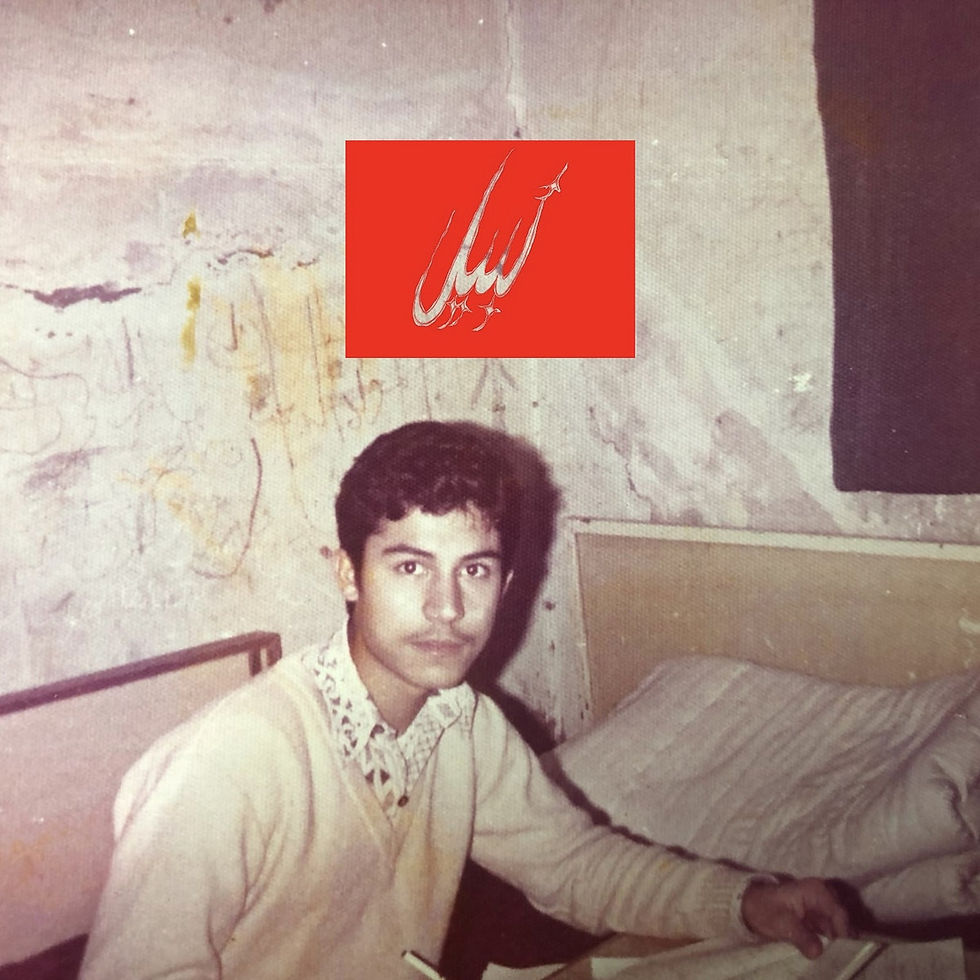
With his latest record Ghayoom (Arabic for “clouds”), Yasir Razak leans fully into that emotional terrain. The title itself reflects what he describes as “a landscape of emotion that is constantly turning itself over, revealing new things and changing shape,” mirroring a writing process rooted in instability, repetition, and reflection. Much of the album was shaped in the aftermath of a return to Iraq—a trip that resurfaced early memories, family ties, and the disorienting feeling of existing between places. “I was at a place where I was very confused about what it meant to be a person,” he admits, a sentiment that quietly anchors the record’s sense of drift and longing.
The shoegaze comparisons, as he puts it, are almost incidental: “If you strip down the songs, they’re pop songs… the haze just happened to work.” What remains, beneath all the noise is a body of work that transforms personal history into a shared emotional language, one that transcends both genre and geography.
In this interview, we talk about the overwhelming response to ghayoom, the confusing side of being treated like a novelty, and how Yasir is carving out his own lane by focusing on raw emotional honesty and the deep connections he’s building with listeners across the diaspora.
there are some people who are part of this "gotta catch 'em all" Pokemon mentality with music, where it's one-upmanship and out-niching other people. That's the side of music I find the most boring and deflating. I don't want people to listen to my music because it's a genre thing, asking, "Have you heard this Arabic shoegaze?" I don't want people to engage with my music in that way, because it feels trivializing.
A lot of people arrive at heavy, guitar-driven music through the hardcore or metal scenes. But you were obsessed with pop music growing up. How did that pop background ultimately lead you to the heavier, noisier sound you’re making now.
I think probably through college and going to DIY shows where I went to school. Just seeing a lot of that culture there. I guess I'm trying to think back—I don't think I really listened to much heavy music. In middle school, that's when I started playing guitar and a lot of people get into classic rock. There was a lot of learning guitar and listening to classic rock music that I really didn't enjoy much after that. Even now, can I listen to classic rock music and find something in it? For a long time, I despised it. But seeing the ways different people played rock music in college was hugely influential, and just experiencing music live and seeing how bands play. I was never very into hardcore or metal though. Those were never genres that grabbed my attention as much as the weird art rock or indie rock that came through.
You’ve mentioned that in the past the predominantly white DIY indie spaces in Virginia felt like a club you weren't part of. What was the turning point that you just had to carve out your own lane and bring nabeel into the world?
I think it just came with time, maturity, and confidence. But it started with a pop project. I left and went to grad school in North Carolina, and then ended up coming back to the town where I had spent college. That was the scene I was referring to. I became close friends with this guy Travis Legg, who was this psychedelic, free, childlike-spirited friend of mine. I had a toy keyboard, and something about it really opened things up because I didn't take it seriously. Writing anything on that felt cool and exciting.
I had to go through the process of that project, which was very lighthearted, silly, almost tongue-in-cheek making fun of music in some ways. It was around the same time Alex Cameron and artists like Kirin J Callinan were getting attention. All these Australian pop artists were doing this over-the-top melodramatic pop music. I think it took doing that first as a joke almost, but then realizing it was kind of serious. That broke the ice and made me feel I could actually perform.
Your record ghayoom translates to "clouds" in Arabic. For readers who might be discovering your music for the first time, how would you describe the core concept behind the album, and what made that specific word the perfect title?
For some reason, I gravitate towards large natural imagery a lot of the time. A lot of the feelings we experience shape-shift quite a bit, and we can find ourselves in a different headspace from day to day. But there are these things that recur as well—patterns or things you get hung up on, certain expressions or moods that have a repetitive nature, and you start to recognize them in some weird way. The imagery of clouds changing shape, coming back, forming and reforming, emotionally felt exactly like what I had been going through during the writing process. Turning ideas over and over again. Thinking about these big themes in my life, trying to sit with them for a moment and concretize something that can't be concrete. It meant a lot of things to me, but mostly it signified this landscape of emotion that is constantly turning itself over, revealing new things and changing shape, but still at its essence recurring in some way.
You went to Iraq in 2022 and this album was a result of what came after that travel. Could you tell us more about that?
It was a time where I was feeling very unattached to most things. I didn't have a job at the time. I had quit my work as a teacher where I'd lived for 12 years. I just felt I needed to do something. I didn't know what it was, but I felt stagnant and claustrophobic. That whole trip spanned several continents and countries. But the family connection particularly is what I drew from in Iraq. I came back to the site of so many memories from when I initially visited when I was 10. I was born in Iraq but didn't visit until I was 10 because we left soon after.
I had some profound experiences there that stayed with me as memories. For example, meeting my grandmother who was ill at the time. Coming back to that house, recognizing it, feeling her presence there, and this weight of experience that I didn't get to have. Just being a person who is born in one place, has history in one place, and then transfers somewhere else—as a kid, you don't really realize what that means. A lot of those larger existential questions came from those memories resurfacing. The whole trip was very transient. I felt I'd taken 15 flights in the course of five months. I was at a place where I was very confused about what it meant to be a person.
You decided to record the album entirely in Arabic. Why did you make this choice?
Many reasons, but wanting to feel closer to the language and wanting to create a connection to my family and where I come from. Also, finding it inspiring to see artists making music in Arabic that isn't typical for the language. I constantly sought that out on the internet myself. I was trying to find artists doing unique and creative things from the Arab world.
At a certain point, I was frustrated by not finding exactly what I wanted to hear. Not that there weren't projects I enjoyed, but nothing quite in the vein of a very particular world of music I grew up around—the slowcore, Elliott Smith-style songwriters, Pavement, that indie rock world from the 90s, Smashing Pumpkins. Things that felt a little more real, authentic, and raw. I just remember writing songs, and I lived with a producer at the time who ended up producing all of the nabeel songs that are out. His encouragement and having that ease of access made it all fall together.
Do you find that singing in Arabic allows you to access a completely different emotional palette than writing and singing in English would?
I do, especially because I have a Master's in English literature and I feel so critical of the English language that I don't even bother to write in English. It just feels over-thought. I'm an over-thinker, especially when it comes to language. I'm not as strong in Arabic as I am in English, and that is freeing. I feel I'll be pleased a bit more easily with what I write in Arabic. There's a feeling of simplicity being more satisfying for me there because it's not a language I feel so critical of.
You’ve mentioned that you are not so much into shoegaze, yet the DNA of the genre is so present in your music. The themes of longing, yearning, and looking at old photographs evoke the exact kind of nostalgia that draws people to this sound. Do you feel like your songwriting instincts just naturally aligned with the emotional core of the genre?
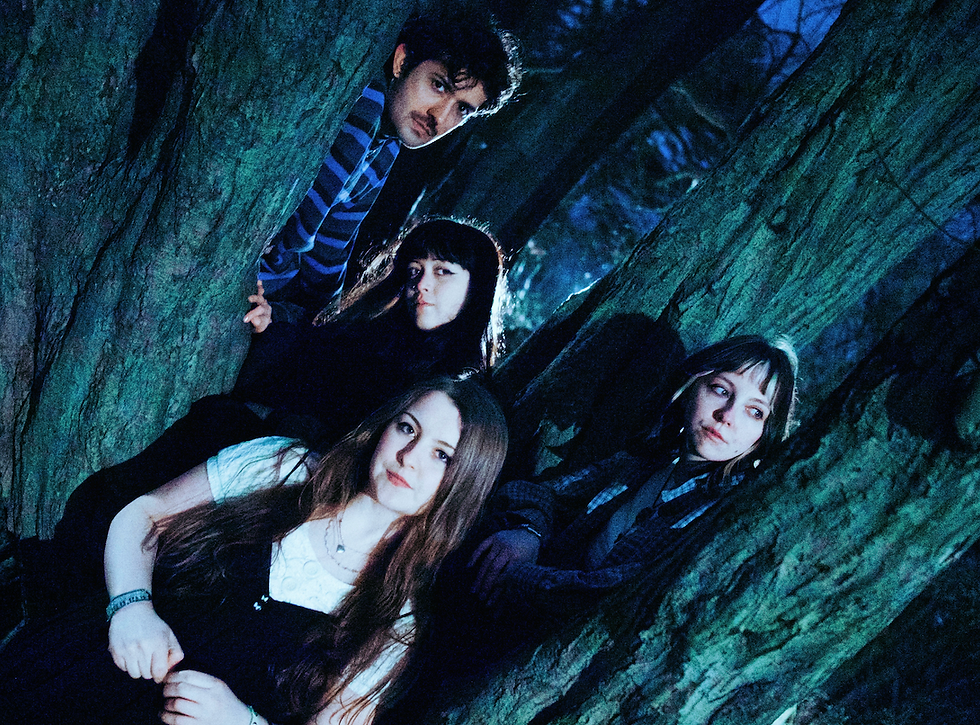
I do. It almost was incidental in some way. It didn't really feel like a choice as much as these are songs I wrote on guitar, a lot of them on an acoustic guitar. A lot of the shoegaze elements come from my guitarist, Jake, who is our lead guitarist in the studio. He is hugely influenced by Kevin Shields. He is a true shoegaze fan. If you strip down the songs, they're pop songs for the most part, but if you add that layer of noise or haze, that's where a lot of those elements come about, and it just happened to work well. I don't mind when people call it a shoegaze project. At this point, everything with distorted guitars is called shoegaze.
If you were to listen to shoegaze, what bands or artists would they be?
Very bare bones, very basic. My Bloody Valentine, Slowdive. I'm very elementary in my shoegaze tastes. I'm not seeking out modern shoegaze or part of this whole shoegaze revival. They Are Gutting a Body of Water is one of those bands that really impresses me; they have way more going on than just shoegaze. LSD and the Search for God is a really impressive band as well. We got to play with them and their live set is stunning. It's really artful in the way the music hits you.
It's almost impossible to avoid being an Arab and your work not being politically meaningful at this point, especially if you're choosing to spotlight cultural elements like language.
Were there any Middle Eastern, Southwest Asian, or North African artists past or present whose approach to music or poetry deeply influenced the DNA of Nabeel?
Interestingly enough, there's a woman called Seta Hagopian. She's an Iraqi Armenian singer. She was probably the first Iraqi artist I heard that I felt really connected to. If you ever listen to old Ethiopian recordings, like Aster Aweke, the recording itself has so much noise and the dreamlike quality transports you into this dreamy, melancholic place. Seta Hagopian was one of those artists where I first heard her and thought, there's something about her expression that really feels aligned with my experience of melancholy and longing.
By singing in Arabic, you're making your identity highly visible in a predominantly white indie scene. You've spoken about how preserving the Arabic language is a way of fighting cultural erasure. Because of this, do you view Nabeel as a form of political resistance just as much as it is a musical project?
I don't know that I would view it just as much. I only say that because I don't feel politics are part of my songwriting process necessarily. It's very emotional, like therapy in some way. But I don't think you can remove the political from it at a certain point. It's interesting to see the way people receive things. There are all kinds of reminders of your identity in the way people respond. Western audiences responding in a "I can't believe this, an artist from Iraq!” way is at once simple and slightly insulting. I imagine all the stereotypes, some man in the desert dressed in traditional Bedouin garb. I have to make sure I don't become a bitter person about any of that, so I find it important to keep in mind that any interest is welcomed and accepted. But I do think people are pretty naive in the way they talk about these things. I was raised in the United States, I've been here my whole life. I happen to be from Iraq and have maintained a connection to the language and found that important to myself. It's almost impossible to avoid being an Arab and your work not being politically meaningful at this point, especially if you're choosing to spotlight cultural elements like language. A lot of the songs are about family. A lot of that is tied into diaspora and my family came here due to war. So there are intense things wrapped up in the project itself just by nature of how it came about, who I am, and the circumstances of my life.
Now that the album has been out and living in the world, what has the reception been like across different audiences?
It's been awesome. Which I'm surprised by. I can't tell what the demographics are, to be honest. The people I've noticed who reach out to me the most are people who have a connection to some sort of alternative identity, whether Arabs or South Asians. I find that interesting because I really relate to it. I grew up watching Hari Kondabolu, an Indian stand-up comedian. I remember listening to his podcast with his brother in my 20s. They're not Arab, but they're two brown dudes who grew up in New York talking about their experience, and I found it refreshing.
Similarly, I've noticed people who have a diaspora identity of any sort are pretty interested in the project. They relate to a lot of the themes and sentiment behind it. Then obviously there are Western audiences who are also interested, and that gets a little more confusing. Sometimes people are just really into shoegaze and like the music. Then there are some people who are part of this "gotta catch 'em all" Pokemon mentality with music, where it's one-upmanship and out-niching other people. That's the side of music I find the most boring and deflating. I don't want people to listen to my music because it's a genre thing, asking, "Have you heard this Arabic shoegaze?" I don't want people to engage with my music in that way, because it feels trivializing.
Do you know if the record has made its way to listeners in Iraq? What has it been like to hear from people tuning in from that region?
Definitely. I get messages from people from Iraq on Instagram. I really appreciate that. There are some people we've made an online friendship through, and I would love to play a show in Iraq. That's on the dream list. I don't think it's made a big impact in Iraq at all, but I'm hoping someday.
Is there a scene in Iraq for this type of music?
There is, surprisingly so. There are a lot of kids who are into shoegaze, indie rock, metal. There are certain artists that really hit big. An Iraqi friend who visited fairly recently was telling me how much people love Evanescence in Iraq. I thought it was hilarious. No shade on Evanescence, a lot of their songs are cool. The internet is global, so I think more and more we're going to see people engaging with what we would deem traditionally Western music in the Middle East.
When you perform these songs live, especially in DIY spaces where the crowd might be experiencing Arabic language guitar music for the very first time, what is the energy like in the room?
A lot of the times you go to a show and you can't even really understand what the person is saying anyway. Sometimes it's funny because people don't even realize it's not in English. At that point, the song is resonant, people like the sound, which is really nice. But what means a lot to me are people who are specifically there for that reason. We played a show up in DC the other day, and having some folks who you can tell it means a lot to them to see something in Arabic performed in a setting that's not what you would expect. Those are the situations where people will come up. Getting asked to take a photo for the first time by somebody was very strange, but I get a lot of joy from that. I have always idolized musicians myself, they have always been my heroes. There's something exciting about the idea that maybe I could present an alternative way of doing things for them. Seeing what younger people are going to do down the line is a really exciting prospect to me.
To wrap things up, what is on the horizon for Nabeel? Will you be heading back to the studio to make new music or will you be touring?
I have plans to record more in early April. We've got some skeletons for another EP. I just want to record as many songs as I can and release them as an EP first, and then in the summer I want to hit the studio again and try to put together a real album. At this point, I've got a lot of demos and songs written but not recorded, and I can't record my own music very well. I would like to do some more touring, but it's a bit difficult. I'm a teacher here, so we're in this weird place where it isn't my main job but it is something I want to take seriously. I do have the summer months off, so I'm trying to decide what the best way to go about touring is in the summer.


Comments