Mad Honey Return With Bridge Over Cumberland

By the time a band’s most recognizable song has crossed 5 million streams, the old indie fantasy of staying small has usually already evaporated. Mad Honey have long since moved past that fantasy anyway. What “Blue & You” offered was a shimmer of recognition; what Bridge Over Cumberland offers is something more settled and curious, a record that takes the band’s dream-pop origins and recasts them as part of a larger, more deliberately built sonic framework.
That shift is the point. Bridge Over Cumberland feels like the work of a band that has spent nearly a decade figuring out not just what they sound like, but how they want to sound together. Bowed strings, piano, glockenspiel, woodwinds, and synths widen the frame, but they also make the songs feel more physical, more grounded, and less reliant on atmosphere for its own sake. Tuff Sutcliffe has described the band’s approach as “exploring who we are and chasing whatever feels real in the moment,” and the album sounds like the result of that method becoming clearer, and more confident.
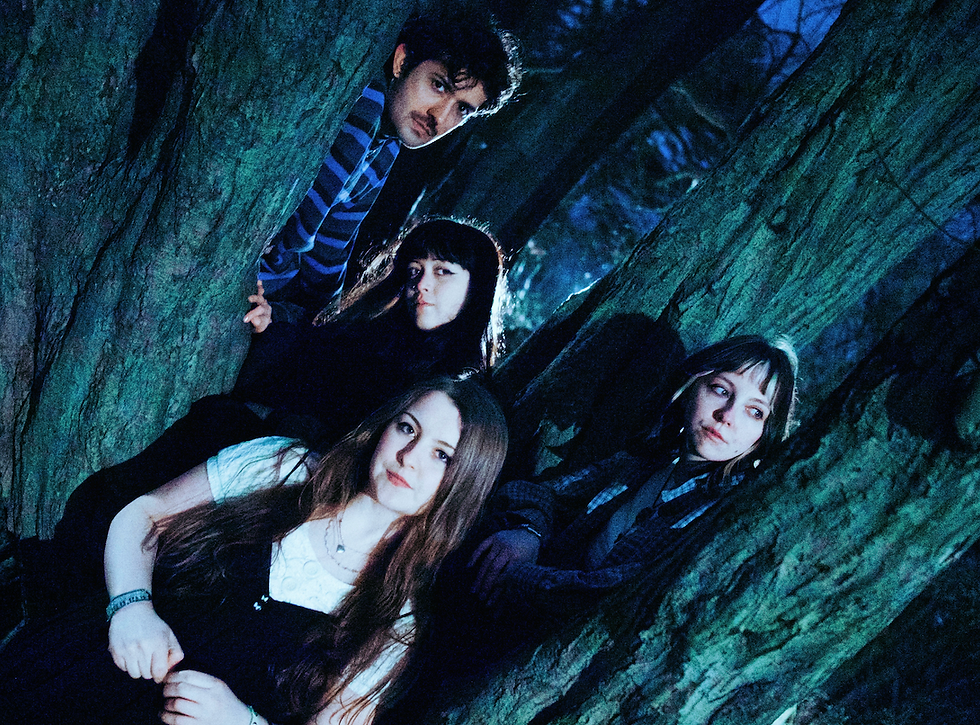
Sutcliffe leads the group alongside Lennon Bramlett, who handles electric guitar, bass, slide guitar, drums, and production; Steph Nozomi Krichena on drums and percussion; and Bran Palesano and James Tunnell on electric guitars. Their backgrounds range from classic rock and jazz to shoegaze, classical music, and electronic production, and the record reflects that spread without ever feeling overstuffed. It is a band sound in the most literal sense: coordinated, slightly unruly, and shaped by people who trust one another enough to let the songs stretch.

We spoke with Sutcliffe about the long road from “Blue & You” to Bridge Over Cumberland, the pressure and irrelevance of streaming-era success, and the way memory, place, and loss shape the album’s emotional landscape. We also talked about how this record finds the band finally arriving at a version of itself that had been there all along.
As a band, we don’t really stress about streams or trying to game the algorithm. For us, making music is all about exploring who we are and chasing whatever feels real in the moment.
To start at the beginning, what are your earliest musical memories—individually and as a band—and how have they shaped the music you make today?
We’ve all got pretty different musical backgrounds, so our influences are kind of all over the place. Some of us were raised on classic rock, while others gravitated toward jazz, shoegaze, or even classical and electronic music. Lennon grew up producing electronic music, and Steph is a classically trained percussionist. I think pulling from all those foundations is what makes our sound unique.
Various media outlets label you as a shoegaze band. How do you feel about that classification? In your own words, how do you perceive the sonic world you are creating?
We don’t really see ourselves as a shoegaze band, but honestly, it’s cool to be mentioned alongside so many artists we respect. At the end of the day, we just think of ourselves as a rock band, but we really like experimenting with more ambient and ethereal textures.
Your single “Blue & You” has surpassed 5 million streams on Spotify—an incredible feat for an indie act. In an era where streaming numbers often dictate a band's "value," how do you balance the pressure of the algorithm with the desire to evolve artistically?
As a band, we don’t really stress about streams or trying to game the algorithm. For us, making music is all about exploring who we are and chasing whatever feels real in the moment. Our ethos for creation and evolution in music is more about the exploration of self, spirit, and something intangible. Sometimes people connect with what we put out, and sometimes they don’t, but either way, we’re just in it for the love of creating. It is a kind of cosmic compulsion; it’s how we make sense of ourselves and the world around us.
Having had the privilege of an early listen to Bridge Over Cumberland, it’s clear this is a significant departure from the dream-pop realm of "Carole’s Slumber Party" or "Blue & You." It feels like a total "leveling up." What was the intentional catalyst for doing things differently this time around?
It’s been nearly ten years since we started this project. We went through so many phases and life changes before we found the sound for this record. Our first album, Satellite Aphrodite, really bridged the gap between our dream-pop beginnings and where we’re at now. While writing Bridge Over Cumberland, we found a lot of inspiration in folk and ambient sounds. As a band, we’re always up for the challenge of reinventing our sound with every release—it keeps things fresh and interesting. We’re already deep into demos for the next album, and honestly, everything’s coming out pretty heavy. But as always, we just make whatever feels inspiring in the moment.
You’ve introduced bowed strings, piano, glockenspiel, woodwinds, and synths for the first time. What did these specific textures allow you to express that guitars alone couldn’t capture?
Bringing in these instruments added a whole new dimension to our sound. The natural tones of those instruments brought an earthy texture that really grounded the album in a way guitars alone just couldn’t. It felt like the right direction for the story we were trying to tell, and it allowed us to explore a more organic, human feeling throughout the record.
This record feels more expansive and intentional than your debut. Looking back at the production, what felt most different about the way you worked together, and how have you changed personally since that first release?
Our debut album was recorded in a much more isolated way. Everyone mostly tracked their parts separately, and there wasn’t as much collaboration from the whole group. With this record, a lot of the recording happened with all of us in the same room, which made everything feel more connected and alive. We got to go to a big studio together for the first time, as opposed to Lennon’s bedroom. We all had more of a say in the production, writing, and mixing process, so it really feels like a true group effort.
There is a recurring motif of exploring our connections through the structures we inhabit—houses, walls, and rooms. What drew you to architecture as a container for memory, and how did that imagery help you trace the "silhouettes of heartaches"?
I’m really drawn to trying to make sense of the connections we feel with others. It’s spiritual; you can’t touch it or hold it, but we can feel it so intensely. If you have lost someone but still have an object they gave you, somehow they are still with you. We visit old, beautiful buildings, and we can imagine the people who may have once walked through them hundreds of years ago. I feel our energy remains in places and things long after we’ve gone, and that can feel haunting, but I think it’s endlessly profound and weighty.
In the title track, you ponder whether your dreams lie in the Tennessee hills of your youth or the Oklahoma plains where you live now. How does this sense of physical displacement influence the "nervy" emotional landscape of the album?
I’ve never really been able to put my past into words. It’s always felt like this big, looming mystery. Writing this record was my way of trying to make sense of my childhood while I was dealing with loss in the present. There was a lot to unpack all at once, but channeling those questions into music has always been the best kind of therapy for me.
"Moshfeghian" has been described as the "thesis statement" of the record. Between that and your other personal favorites, which track do you feel most fully captures the spirit and energy of Bridge Over Cumberland, and why?
"Marie’s Song" was a big turning point for the record. We wrote it for our friend Marie, who showed up in my life at exactly the right moment. Having her on the record and in our lives brought a real sense of groundedness. She was like a life raft, giving me hope for a future I couldn’t quite picture before. All the turmoil from earlier in the album kind of comes to a head in "Moshfeghian," and then "Marie’s Song" leads you into what happens next, after the grief.
In an industry that is increasingly volatile, what is it that motivates you to stay together as a unit and keep pushing the boundaries of your music?
We always say we’re friends first and a band second. That might sound simple, but it honestly makes a huge difference in a creative space. When you really know and trust each other, it just opens you up to new ideas. Having that kind of respect and reverence for one another keeps us willing to challenge each other musically and brings a warmth to the work that I think shines through.


Comments