The Veldt: The Pioneers Who Built Shoegaze Despite Industry Racism

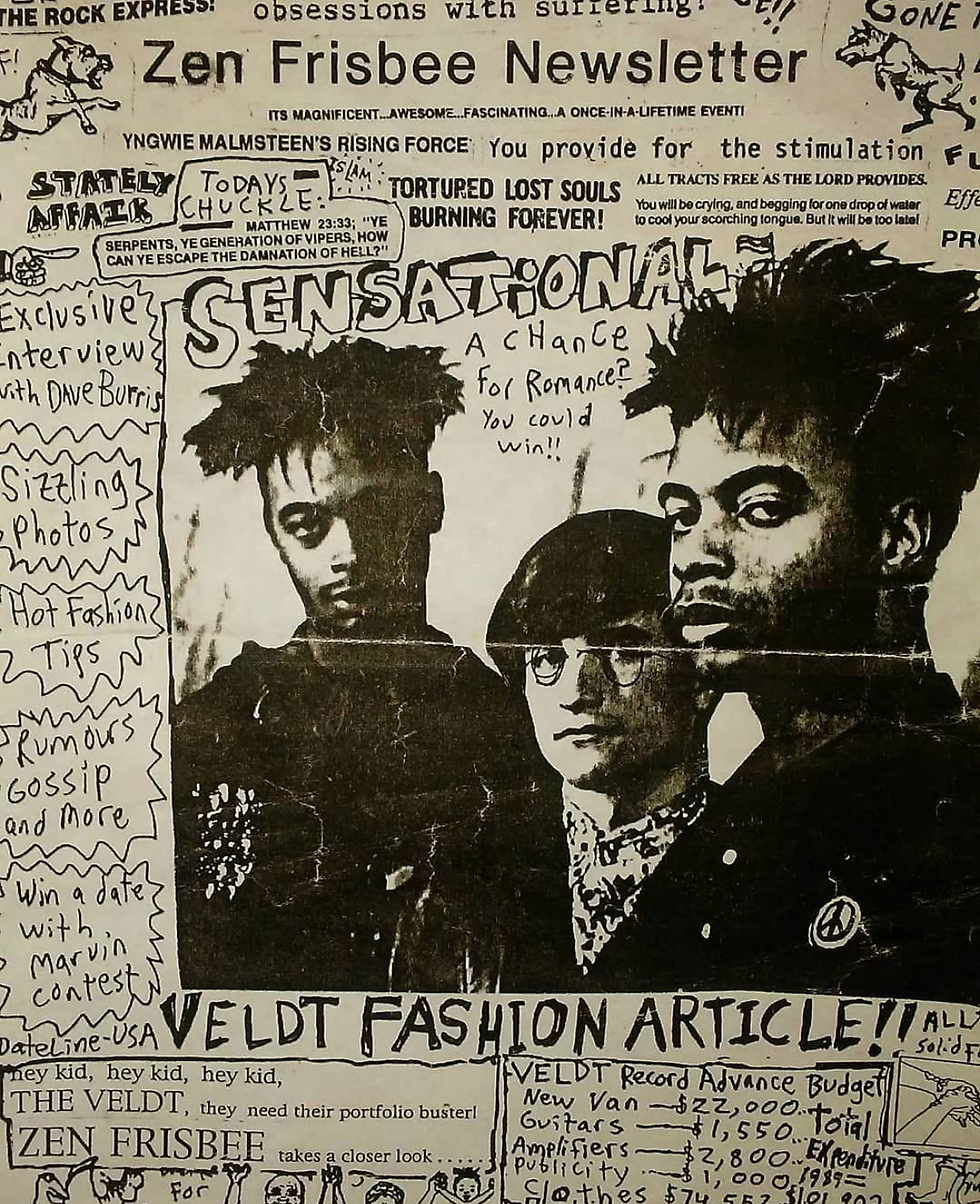
The traditional history of shoegaze became a bit of a cliché. We're talking pale British kids in big sweaters looking at pedalboards in 1991 in a rehearsal studio in the Thames Valley. It was a comfortable, sanitized narrative, but it systematically erased the Black artists who were deconstructing guitar music years before the UK music press coined a catchphrase for it.

Out in Raleigh, North Carolina, brothers Daniel and Danny Chavis were building a sound that made total sense to them—one born from discovering Cocteau Twins' Treasure and stitching that ethereal, chorus-soaked noise directly onto the Southern gospel, blues, and '70s Quiet Storm R&B they grew up on. They were doing this in 1985. They were sharing stages with The Church, Cocteau Twins, and The Jesus and Mary Chain. By every metric of influence and innovation, they were pioneers of the shoegaze sound.
The music industry, naturally, had no idea what to do with them. In the late ’80s and ’90s, major labels operated on strict racial segregation. If you were Black, you were routed to R&B or hip-hop departments; if you picked up a Jazzmaster and cranked a Boss delay pedal, you were treated like an anomaly. The Veldt were denied European tours with Lush and Cocteau Twins, had their album Illuminated shelved by their record label, and were routinely told by white rock critics that their music was "too soulful". As Chavis frames it, being a Black pioneer in a whitewashed subculture felt like being "an astronaut at a science fiction convention." You're the one who actually went to the moon, but no one cares.
But the truth has a funny way of outlasting the gatekeepers. Four decades later, the culture is finally catching up. Today, a new generation of kids—including myself—armed with way more information and zero patience for old racial borders, is finally giving The Veldt their flowers. Their legendary, long-lost 1989 album, Illuminated, has just been officially released. Their 1994 masterpiece, Afrodisiac, is rightfully hailed by Pitchfork as one of the greatest shoegaze records of all time.
Talking to Daniel Chavis now, there's no rehearsed PR polish. He's funny, blunt, deeply perceptive, and completely uninterested in rewriting history to make the industry look comfortable. We spoke about the racialized politics of the '90s alternative scene, the secret connection between yacht rock and shoegaze, and why—despite four decades of systemic friction—he’d do it all over again.
I always thought this music had a future sound. Everybody who told me it wasn't going to amount to anything was all wrong.
When you first started playing in the early '80s, the term "shoegaze" didn't even exist. What was the alternative music scene like for you back then, and can you recall the exact moment you discovered the sound that would ultimately change your life?
Daniel Chavis: At the time in 1983, it was called alternative music or post-punk music. A lot of the kids I hung out with at these scenes had 45s of Siouxsie and the Banshees, The Cure, and Bauhaus—things we were really into. It made it really good for me to find out about this stuff. At the same time, I was playing in a Baptist church in North Carolina. It didn't work out that well because I played too loud, so they fired me.
I was in a band called The Sacred Cows with a bunch of kids from those shows. We would play hardcore shows that were coming through for kids. There was a place called The Brewery in Raleigh, North Carolina, and our first show was opening for a band called Corrosion of Conformity, a really big hardcore band led by my friend, Reed Mullin. We just took it from there. We didn't really start playing professionally until about 1985. Our first big show was opening for The Church on their "Under the Milky Way" tour. After that, we opened for The Pixies, Throwing Muses, The Saints, Jonathan Richman, and Concrete Blonde. The early '80s were a really good time for us to play.

As for discovering that sound, this girl named Sarah Bell was a friend of mine. I went by her house one day and my friend Mike Dean, who played bass for Corrosion of Conformity, had all these records out. I said, "Man, what's this right here?" and saw this beautiful cover that said Treasure by Cocteau Twins. Mike said, "Put it on, it's Sarah's.". I put "Lorelei" on and my life was never the same again. I'll never forget that afternoon; it was beautiful. I've been with Robin Guthrie's sound ever since.
To me, it had elements of hip-hop and R&B in it. From my ears, that was what I heard. I thought, "What if we put beats to certain things like that and played?". For so long people were telling us that it was too many styles, it wasn't good, and it didn't make any sense. That came from both sides, not just white people but Black people too. They were like, "Get it out of here, man," because they didn't see any significance in the sound. But we persevered. Now, here we are decades later.

Do you remember what kind of gear you used to create those dream-like soundscapes?
Daniel Chavis: I had very simple stuff. I didn't have all the pedals that I have right now. I just had a Boss delay pedal and a distortion pedal. That's all I had—delay and distortion. I really should go back to it, to tell you the truth, because no matter how many pedals you have, unless you have a song, it doesn't make a difference. That's what Robin Guthrie always told me: it's the song. It's like Japanese animation—the animation is okay, but you have to have the story. The story and the content are what matter, just like a person's character. If you don't have that, you don't have anything.
You formed the band with your brother. Was he immediately on board with this new sound?
Daniel Chavis: No, he was not on board initially. My brother was in an R&B funk group called Isis with a bunch of older Black guys. We just got together writing at some point, and he began to come to shows with me. It worked out really well, and we've endured for the last 50 years.
When did you form as a band?
Daniel Chavis: '85, '86. The band was called Psycho Daisies. We went maybe a few months and then changed the name. We took the name “The Veldt” from Ray Bradbury's The Illustrated Man.
Toward the end of the '80s, shoegaze and dreampop were just emerging. For those of us who didn't experience it firsthand, what was the atmosphere like and how did the alternative scene actually look?
Daniel Chavis: It was cool. It wasn't so much a massive scene at the time because this is North Carolina, but there was definitely an audience for it. They were open because so many good bands were coming out at the same time: Modern English, Dif Juz, Wolfgang Press, the Banshees, The Cure.
I would get all my stuff from this place called Schoolkids Records. Every time I went by, the guys would say, "Have you heard this yet?" and introduce me to TV Personalities, Felt, and all these other bands. We began to get a reputation in town for playing this kind of music, and my brother's voice was really good at it. We gained recognition spreading throughout the Triangle area in Raleigh. Opening for The Church under the Milky Way tour was our biggest local milestone. From there, we began to get opening slots for a lot of other people, right on down to Oasis.
What were the audiences like back then? Did they understand your music?
Daniel Chavis: I think they got it. It was a little bit of a surprise for them at the time, but there wasn't anything else like it. There weren't any Black people doing that kind of stuff back then, except us and A.R. Kane. So there wasn't really too much to discern other than hoping one day the music would catch on. I always thought this music had a future sound. Everybody who told me it wasn't going to amount to anything was all wrong.
Most bands in the genre cite UK post-punk records as their starting point. But you've talked about your grandfather introducing you to the blues and playing Southern juke joints as teenagers. How did your Southern gospel and blues foundations specifically influence the way you make music? Do you think soul, R&B, and shoegaze actually share a fundamental connection?
Daniel Chavis: They do. My grandfather was an avid fan of the blues. We had every 45 record in the world in the house: Ike & Tina Turner, Sam Cooke, Otis Redding, Sister Rosetta Tharpe, and blues artists like Son House and Slim Harpo. I heard that every day. One day he came home and said, "I got this record I think you boys might like." It was a 45 of Blondie's "Heart of Glass.". He was an older man, but his ear was good. We found out about Blondie through my grandfather and have been the same ever since.
As for the R&B influence, Liz Fraser's voice can be a bit like R&B layered over the background of Robin's music. There used to be a college radio station called WSHA at Shaw University that ran a program called The Quiet Storm. It was hours of chilled-out R&B slow jams. The DJ would go, "This is WSHA on your radio dial. You are now listening to The Quiet Storm. Brothers and sisters, we all need an attitude adjustment. So sit back, relax, and don't stomp your feet because we're going to give you what your soul needs.". We would hear Luther Vandross and Anita Baker. Shoegaze has that exact same vibe, but I don't think anybody really understood the capacity of how those two could go together.
I feel there is a connection. I can't put it into words but I feel it. When I say that, people say I'm crazy...
Daniel Chavis: Welcome to my world. Of course it fits. If you take Anita Baker's voice off and put Liz Fraser's on, you have the same vibe and the same moments. Look at the media now; all you see is violence, anger, and songs focused purely on money. Nobody is talking to the people who want 45 minutes of just chill time. They're missing out on a whole thing while the world is so angry right now.
When we played with The Chameleons, this lady said, "Man, that was really spiritual.". People really needed that time away from all the sensationalism in this world. When we went out there with Cocteau Twins and Lush, we gave that to the audience, and we saw firsthand how it worked. Yet, people still don't give us props. There are newer bands out there with nothing to do with that genre or era, and they get more props than we do.
You've spoken many times about how major labels tried to change your sound. How much of that was about the music itself, and how much was rooted in an industry that didn't know how to market Black musicians making alternative guitar music?
Daniel Chavis: The United States is a very racist place, and I can tell you that verbatim. Let me go back a little bit. In 1971, my family moved to Apollo Heights, a white neighborhood here in North Carolina. My grandfather owned a window-washing business and drove a Cadillac, but we had been living in a very ramshackle house. When we moved into the new place, I remember looking out the window and seeing all these white people standing on the side of the street. I asked, "Mommy, is it a parade?" and she said, "No, baby, it's not a parade." They were just watching us move into our home.
Around '72 or '73, we met a little white kid named Bobby and played Hot Wheels with him. One day, we went down the hill to see if he was home. A gate and a laundromat separated the areas. Suddenly, a white lady grabbed me by the arm and dragged me behind this building, right through the laundromat. Another white lady sitting in a lawn chair said, "Hold him while I call the police. He's been stealing clothes over here.". I was seven years old and started crying. I looked around and didn't see white kids, I just saw kids playing. The lady asked what I was doing there, and I said, "I came to play Hot Wheels with Bob.". She said, "Well honey, you don't belong over here.". I asked, "Why?" and she didn't answer me.

That same moment is exactly how we were treated musically. That stuck with me for the rest of my life. That look on her face when I asked "Why?" is the same way people in the industry treated us throughout our career. When we used to have discussions with label executives, they wanted to put our faces on the covers, and we said no because we knew the stigma of racism. If you're a Black artist, you know what you have to contend with, even though we played to majority-white audiences. So much of that stuff has taken up our careers that you get lost in the mix. We persevered for so long, and it's irritating today to see other so-called shoegaze bands getting recognition on lists when I actually played alongside these pioneering bands. It's like an astronaut going to a science fiction convention—I actually went to the moon, but nobody cares.
Were media outlets or music magazines covering you in the ’80s?
Daniel Chavis: The biggest thing we did was the "New Faces" section in the Kurt Cobain issue of Rolling Stone, right when he died. At that same time, we were being dropped by our label. Beyond that, there wasn't too much written about us. Afrodisiac got some reviews, but a lot of them weren't favorable because critics claimed it was "too soulful" or had too many styles. There was a lot of gatekeeping back then, and there's still a lot of gatekeeping now. But we pushed past those people because we played with a majority of our influences. I don't think too many people, especially Black kids, get that opportunity in their lives.
Were you too experimental for your time and people didn't get it?
Daniel Chavis: No. Just too Black. That's my skin color. It wasn't anything else.
Your album Illuminated got shelved. What was the story behind that?
Daniel Chavis: We had an A&R lady, Claudia Stanton, who introduced us to the Cocteau Twins through Capitol Records and set up the collaboration. But record labels can be very savage. They were changing the guard, and the new executive fired her. This guy, Simon Potts, came to our show and didn't like it. He thought it was "like watching paint dry.". He didn't get it at all, so he dropped us. We didn't stop doing what we did, and we eventually signed with Polygram. Polygram was okay, and we made some headway, but it was really frustrating because their minds were all in different places.
Was it Polygram who cancelled your European tour?
Daniel Chavis: It actually happened to us twice. First, Capitol denied us a tour with Lush in Germany. Polygram denied us going to Europe with the Cocteau Twins in 1994, so we got effed around pretty much back then. They put us on tour with The Smithereens, God bless them. We played in a lot of redneck clubs in the panhandle for about two weeks or something like that. At that time, I think we were about to get dropped anyway, but we were waiting to see what we could do next.
You had to be there. People were there, but it was a challenge playing the panhandle. Since we were playing in the South, we went to these peach gas stations where they sold peaches and rebel flags. We got a couple of rebel flags and started putting them on our amps. When we came out, there were these Marshall amps with these flags on them, and no one knew what we looked like, so when we walked out there...
One night, I was just fed up. This guy comes up to me and says, "Hey man, where are you boys from?" First, I'm thinking, "Boy?" And he goes, "Yeah, man, I really like y'all. I ain't never seen no brothers play with the stars and bars." I said, "Well, I'm American too." He said, "Let me buy you a beer, man."
In certain ways it was challenging because what was I supposed to do, say "fuck you" to this guy? He's giving me a compliment about the music. You've got to give something, and we didn't want to be assholes to them. Some people really liked it, and some people were very indifferent. But I would have much rather been with the Cocteau Twins than playing in West Virginia.
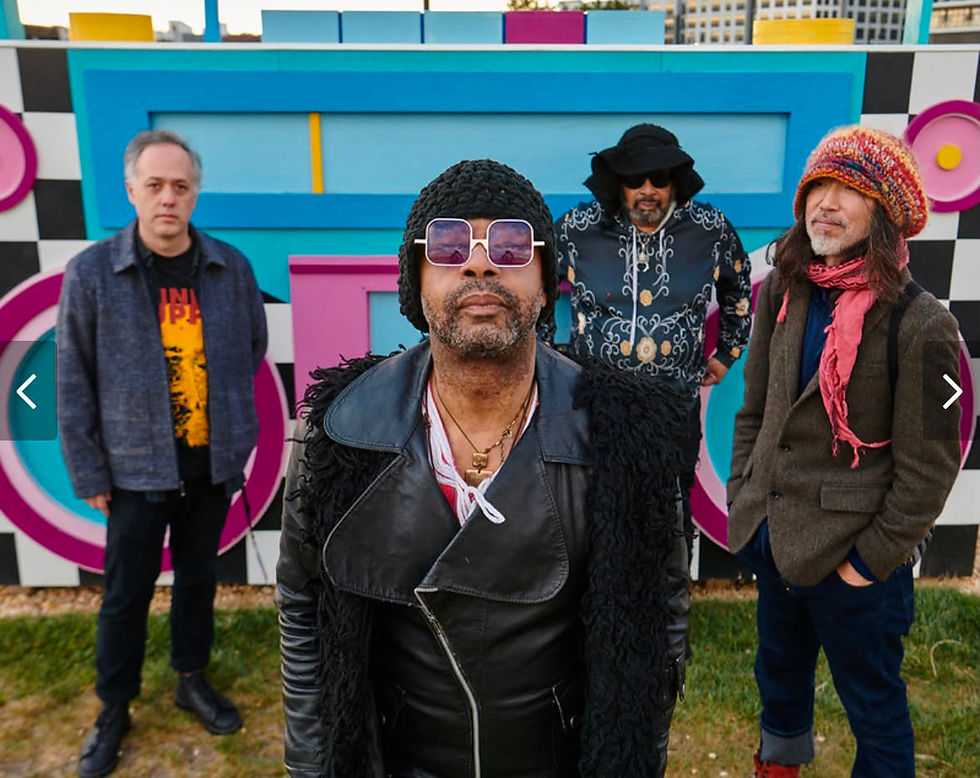
You pointed out that your audience has historically been primarily white. Why do you think that was the case, and do you see that demographic shifting at all today?
Daniel Chavis: I think it's primarily white because that was the audience listening to that kind of music at the time. There were a few Black people there, but I couldn't count them on my fingers like I could now. There were a lot of progressive Black people back then, but they didn't have a voice at the time. They didn't come along until the 2000s when my friend James Spooner started Afropunk. That began to get a lot of young Black kids into that genre of music because he provided a platform for them where there was none.
Now Afropunk has become commercially a bit like cosplay in a lot of ways, but there are people who really lived that life. Some people dress that way and then go home and change their clothes. I've been wearing the same thing for years—well, not the exact same shirt right now, but it's a bit of a dichotomy between the lifestyle and the actual music.
I don't think some people are really built for that lifestyle because I've seen marriages and relationships go through it. You've got to be in it for yourself first before you get involved with anybody, because no one can live your dream for you. It's not the way this game works. A lot of Black people know how hard it is in general just to get through a door, rather than to have a career behind it in this kind of thing.
We just showed that if you're at the door, are you sure you want to do this? I'm like, "Yeah, I want to do it." You're going to lose a lot of people along the way—a lot of friends, a lot of family—because of what you believe in. I'm not trying to compare it to Jesus preaching a long time ago—look at what happened to him—but preaching the gospel of shoegaze music has taken us this far.
Pitchfork named Afrodisiac one of the top 50 shoegaze albums of all time. Did you have a sense at the time that you were capturing something that would truly stand the test of time?
Daniel Chavis: Yes, I did. I knew it would stand the test of time because we were combining elements from both genres, and I felt spiritually there was going to be a connection at some point. I just didn't realize people were going to push back against it so much. But the music has endured.
You also worked with Robin Guthrie on your other album Illuminated. How would you describe the vibe in the studio when you were working with him?

Robin could be a bit of a bully in the studio [laughs]. One day I came into the studio, heard a track, and said, "Wait a minute, I didn't play that guitar part." He replied, "Yeah, but you would have though, right?" I had to agree because we loved and respected him. He would joke around saying, "Today, as your leader..." He was hilarious.
How did other musicians react when Afrodisiac came out? Were fellow artists reaching out or connecting with the sound you were putting out there?
Daniel Chavis: Professionally, prominent Black groups like Living Colour, 24-7 Spyz, Follow For Now, and Fishbone gave us great support. Vernon Reid, Jimmy Hazel, Chris Dowd, and David Ryan Harris all loved Afrodisiac. We were the main Black alternative groups at the time, and we all supported each other.
You have a famous story about running into Patti Smith at a party. What actually happened there?
Daniel Chavis: I was at a party at the Roseland Ballroom after My Bloody Valentine played, and I had taken some mushrooms. I was talking to Kevin Shields and accidentally asked Patti Smith what her name was for the third time. She said, “I said my name is Patti!,” and I blurted out, "Oh, I'm not that rock and roll n*gga you like talking about!". She actually found it funny. Patti Smith was a massive influence on me. Records like Radio Ethiopia and Easter, alongside MC5, Arthur Lee and Love, and Cabaret Voltaire, heavily shaped my guitar playing.
Now that Illuminated 1989 has finally been released, what has the response been like from both long-time fans and people who are just discovering your music for the first time?
Daniel Chavis: It means a lot to me because it finally came out. My 25-year-old self missed out on that response, so getting it now is better than ever. I knew it was going to make an impact.
You mentioned A.R. Kane earlier. They were absolute blueprints for the genre, yet they're constantly left out of the mainstream shoegaze narrative. Do you think that omission comes down to race?
Daniel Chavis: Of course. Is A.R. Kane's music good? Yes, it is. Are they Black? Yes. If that's a deal breaker for you and you don't like it, you probably won't even give them props. That's why we're in the same position we're in.
It took a bunch of British people to put us on stage, just like they did Jimi Hendrix. Nobody white from the United States put him on; British people did.
A.R. Kane deserves a lot more props. They were the blueprint of what we're all about in The Veldt. Rudy is doing something now which is like an A.R. Kane sound system kind of thing. He's not DJing, but he's doing his own stuff and it's really cool. He's going to be coming to the United States pretty soon, I think.
Also Butterfly Child was part of A.R. Kane's crew back in the day and did a lot for us. He passed away, but people should definitely look him up.
Why do you think shoegaze is resonating so deeply right now with younger audiences?
Daniel Chavis: I think younger people are just more open right now. Being as young as they are, they have access to a lot more information than we had.
It's good that they do, because gatekeeping and junk like that kept a lot of people from doing a lot of things. I'm glad that time period is over. We used to get shut out by so many people, but now people are finding out about us on their own, so it's easier. I think it's a great thing.
But I wouldn't rely on the term "shoegaze" as much as "post-punk," because what did punk rock people do after they grew up? They became post-punk—what people now call shoegaze. And what is another word for shoegaze in adult terms? Yacht rock.
It's basically yacht rock just turned up. If you turn any yacht rock song up, it's shoegaze. I'm serious. Have you ever heard a band called Bread? Just listen to that and you'll see what I mean. All those same feelings are in those songs.
And you've got "soul gaze" too—like Curtis Mayfield, Isaac Hayes, earlier stuff like that. Those are all shoegazey songs if you look—like The Delfonics.
Could you name specific albums or songs that fit that "soul gaze" vibe?
Daniel Chavis: "Hey Love" by The Delfonics and "If Loving You Is Wrong". Also, Curtis Mayfield's material and "O-o-h Child" by the Five Stairsteps. They have that soul feeling with eerie elements coming out of the '60s. Early '80s R&B and certain moments of Luther Vandross have that feeling too. Black electronic acts like Anti-Pop Consortium and New Kingdom aren't strictly shoegaze, but they have those elements and were big influences on us.
What are other bands you think deserve more props besides A.R. Kane?
Daniel Chavis: Mostly acts from my time period are the only ones of color from that post-punk genre I can think of right now. But I think any young shoegaze band worldwide deserves a chance to share their songs. They're emerging from Thailand, Japan, and China. There's a Japanese phrase: Ongaku wa mirai no buki da, which means "Music is the weapon of the future.". These young kids are proving that right now.
What are your favorite new modern shoegaze bands?
Daniel Chavis: There are so many: Lovina Falls, Deadly Echo, Iceblink, Tremours, The Black Angels—well, they're not strictly shoegaze, but The Black Angels—and of course, The Dandy Warhols and The Brian Jonestown Massacre.
They're all great bands. They might not all be shoegaze, but they all have elements of that kind of sound. That California sound has those Mazzy Star-sounding bands. Tremours is another band we went on tour with—great band. Spirit Hotel, too. I know I'm forgetting a lot of other bands, so please don't hate me, guys, but there are just so many of them right now.
Are you recording or planning to release new music as The Veldt?
Daniel Chavis: Yes. We are doing two double albums right now. One is called White Noise Supremacy. We are also re-releasing Afrodisiac and a couple of other albums on vinyl.
After all these years of doing interviews, what is the one question you wish someone would finally ask you, and what is your answer?
Daniel Chavis: That's a deep question, man. After all this time, the one question I really wish someone would ask me is, "Was it worth it?” And my answer is yes—without a doubt, yes. We had hard times, we had lean times, we were ignored, and we were overlooked. But look at what we left behind. Look at the music. Look at the people we touched, like you doing the work you’re doing now. If I had to go back and do it all again, and I knew for a fact that it was going to be exactly the same—the rejection, the struggle, the labels messing with us—I would choose it every single time. Because this music, what we built? That’s my legacy. That’s my truth. You can’t put a price on that, man. You really can’t. So yeah, it was worth it—every bit of it.
PHOTO CREDIT: All the photos come from Daniel Chavis' personal archives.


Love the Veldt since I heard of them in the 1990s . Izzy Monsanto
Thank you Mr. Chavis. My black ass will keep making music, even if people don’t get it at first. I appreciate people like you for believing so strongly in yourself.