Floral Bone Girl: Making Shoegaze in Myanmar Amidst an Ongoing Civil War

In Yangon, the underground is fighting for breath. Since the February 2021 military coup plunged Myanmar into a brutal, protracted civil war, the spaces where young people once gathered to sweat and scream have been systematically dismantled. Live venues sit shuttered, curfews dictate the night, and the ruling junta routinely throttles the country into digital darkness with rolling internet blackouts. Merely existing as a teenager here carries a suffocating weight; yet, beneath the tension of a heavily policed society, a massive, overdriven wall of sound is vibrating through the cracks. It belongs to Floral Bone Girl.

When frontwoman Alison Rabies first assembled the lineup, the goal was straightforward: start a band and play fast, angry punk. But as the newly formed group began jamming in cramped rehearsal spaces, the raw aggression naturally gave way to shimmering guitars and a deep sense of nostalgia. You can hear flashes of early Dinosaur Jr. and obscure Burmese alternative icons like Khin Khin Kha in what they do—they write these deeply personal songs, but play them loud and blown-out enough to completely drown out the outside world.
While recording and releasing their debut album Death of My Hazy Sky in the middle of a conflict zone, the band had to navigate strict government censorship—they were forced to reprint their physical CD covers after a track title raised red flags with authorities. Playing live is just as perilous. As Rabies explains, booking a show now requires an official "entertainment license" from the regime, a process that forces bands to submit all their lyrics for approval and hand over the personal information of every player. For an underground act, it is a risk that is simply too high to take.
Getting in touch with them took time—a delay the band later explained was simply the daily reality of navigating internet blackouts and VPN issues. When we finally connected with frontwoman Alison Rabies, we talked about the Yangon underground and her personal experience navigating a male-dominated scene. She is incredibly candid about how draining and depressing it is to be young in Myanmar today—but against that heavy backdrop, the band is determined to hold their ground: "I believe we will stand for as long as we can."
I used to struggle with self-doubt issues back in my first ever serious band as a lead guitarist. I felt underestimated by most of the older guys, and I had my musical abilities doubted just because I am a girl. I didn’t have the freedom to create whatever I wanted, either. I actually got kicked out of that band for pointing out their sexist behaviors.
We'd love to learn more about the people who make up Floral Bone Girl. Could you introduce everyone in the band and let us know what instruments you all play?
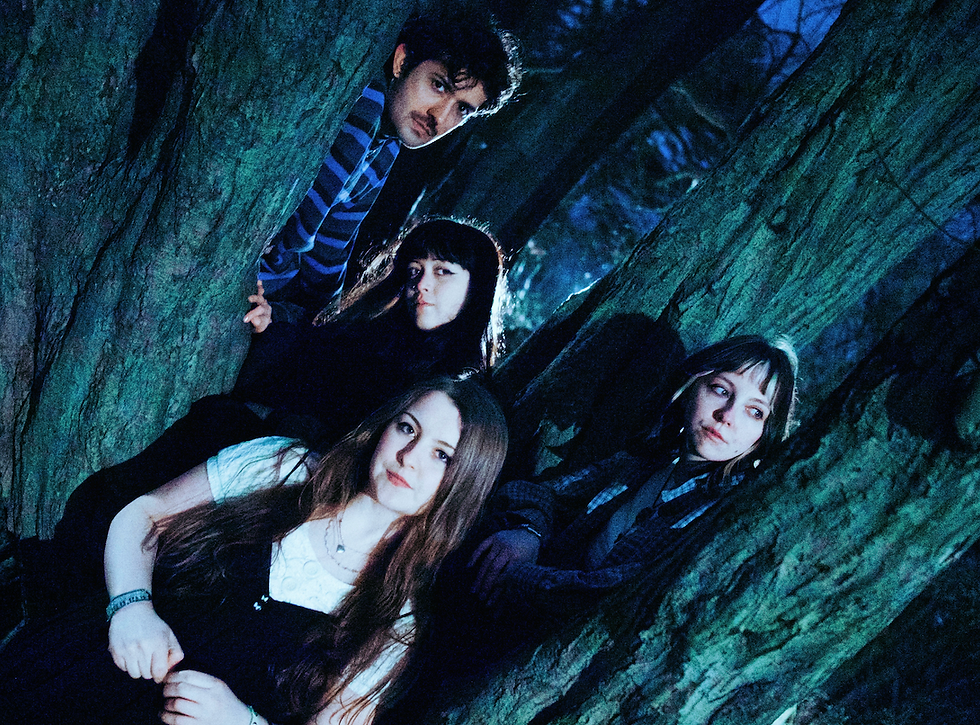
Floral Bone Girl is a shoegaze band from Myanmar. The current lineup is Alison Rabies on vocals and guitars, Yb on guitars, Bhone Letyar on bass, and Thu Ta Aung on drums.
How did the universe bring Floral Bone Girl together? I'm really curious about how you met and how you discovered your shared passion for playing this kind of music.
Kyaw Kyaw (Alison Rabies): I wanted to start a punk-rock (riot grrrl) project back in mid-2024 and already had three or four of my own songs written. I’ve always adored shoegaze, too, and kept in mind that maybe I could form a "shoegaze band" aside from that project someday when I was older. Simply put, I just wanted to play my songs with a full band with drums and bass and be a punk rocker. So, I started searching for a drummer through the people I knew in the online scene, and I found Joey, who was also a beginner on drums. We talked online about our musical influences and how we wanted to play.
Joey had a very close friend named Bhone Letyar, whom he always talked about. We tried hard to search for a bassist together but couldn't seem to find one with the "right attitude" in the scene, so that’s why we chose to ask Bhone Letyar to play bass for us, and he was down! Before our first jamming session, we talked a lot through Facebook Messenger about our influences, how we wanted to go as a band, and wanting to make shoegaze, too. We were very, very naive and "shitty" at our instruments back then and sounded quite "raw"—or "too raw," whatever you want to call it, since we were a "punk" band.
After some jamming sessions, we kept picturing ourselves as punk rockers most of the time, but when we tried to play it out, all that came out and inspired us more was shoegaze and dream-pop. That’s how we ended up making shoegaze and dreamier stuff, because that’s the only thing we were actually good at doing. We decided to proceed as a band that makes noisy music just for fun, not taking it too seriously. However, we lasted for months playing together, so we decided to take this seriously as we became deeply connected.
Floral Bone Girl was a three-piece band until June 6, 2024. After that, we asked our friend Yb from the band Soft Things to help us play rhythm guitar for one gig. He has been playing with us ever since and is a huge part of the band now. Joey left for Malaysia for educational purposes in October 2025. We have a producer friend named Thu Ta Aung who has been helping us; he is also a great drummer and has been playing drums for us since Joey left.
I'm always curious about the musical DNA of the bands I love. Who would you say are your biggest influences as a group?
Our biggest musical influence is an obscure artist called Khin Khin Kha, who is the daughter of the famous Burmese actor Kyaw Hein. She inspired all of us a lot; her vocals and voice are very similar and relatable to Alison’s vocals. We were obsessed with how "alternative" her songs sounded for her time. Other acts include Dinosaur Jr., Alison’s Halo, Patti Smith, The Smashing Pumpkins, Whirr, My Dead Girlfriend, Ozean, Tokenainamae, Fleeting Joys, and, of course, My Bloody Valentine! Early MBV inspired us deeply, too, specifically the Sunny Sundae Smile EP and the Ecstasy and Wine album.
Are there phrases, images, or emotional ideas in Burmese that you feel don’t translate fully into English, but still shape your music?
I believe that the lyricism in our songs has so much impact on how our music is shaped. There are times when I feel like a song would not have hit as hard if it had been written in English, but the language barrier has never been that much of a problem for us.
What does the underground music scene in Myanmar actually look like right now?
The underground scene here right now is still quite small, but almost all local shoegazers support each other.
Yb: Regarding the growth of the underground scene, I feel like it’s actually much smaller and less supportive than it used to be compared to 2018 or 2019. Locally, my dream venue was to play at Voice Of The Youth, but there has been no venue like that here since the coup.
It is impossible to talk about being a youth in Myanmar today without acknowledging the 2021 military coup and the ongoing revolution. How has living under a military junta shaped your drive to make music? Do you view your band as a form of resistance, an emotional escape, or a mix of both?
Being a passionate musician and pursuing a creative passion here—especially now when we can’t even play shows anymore—is extremely draining and depressing. However, we are all so, so grateful for being privileged enough to be able to make music together and connect with fans. At some point starting out, we were just angry teens screaming lyrics about the things we didn't like and the things we did like. Instrumentally, though, some songs make us feel so soft, giving us a sense of escape while playing them out together. That’s why we would say it is a mix of both.
You released your debut album during an ongoing civil war. What has that experience been like, and what specific challenges did you face while recording it?


Comments