deary: The Making of Birding — Poetry, David Lynch, and Track-by-Track Secrets

Full disclosure: I have a soft spot for deary. In January 2025, I found myself in a packed London club to see another band, only to be completely caught off guard. I arrived as a stranger and left a convert, stunned by Dottie Cockram’s ethereal vocals and the band’s dreamlike wall of sound.
Formed in 2021 as a lockdown collaboration, deary began with Dottie Cockram and Ben Easton swapping introspective demos. After their debut single “Fairground” topped the UK Vinyl Chart in 2023, the band went on to open for Slowdive and collaborate with members of Lush and Saint Etienne. By 2025, the lineup had solidified with drummer Harry Catchpole, whose arrival bridged their shoegaze roots with new trip-hop depths.
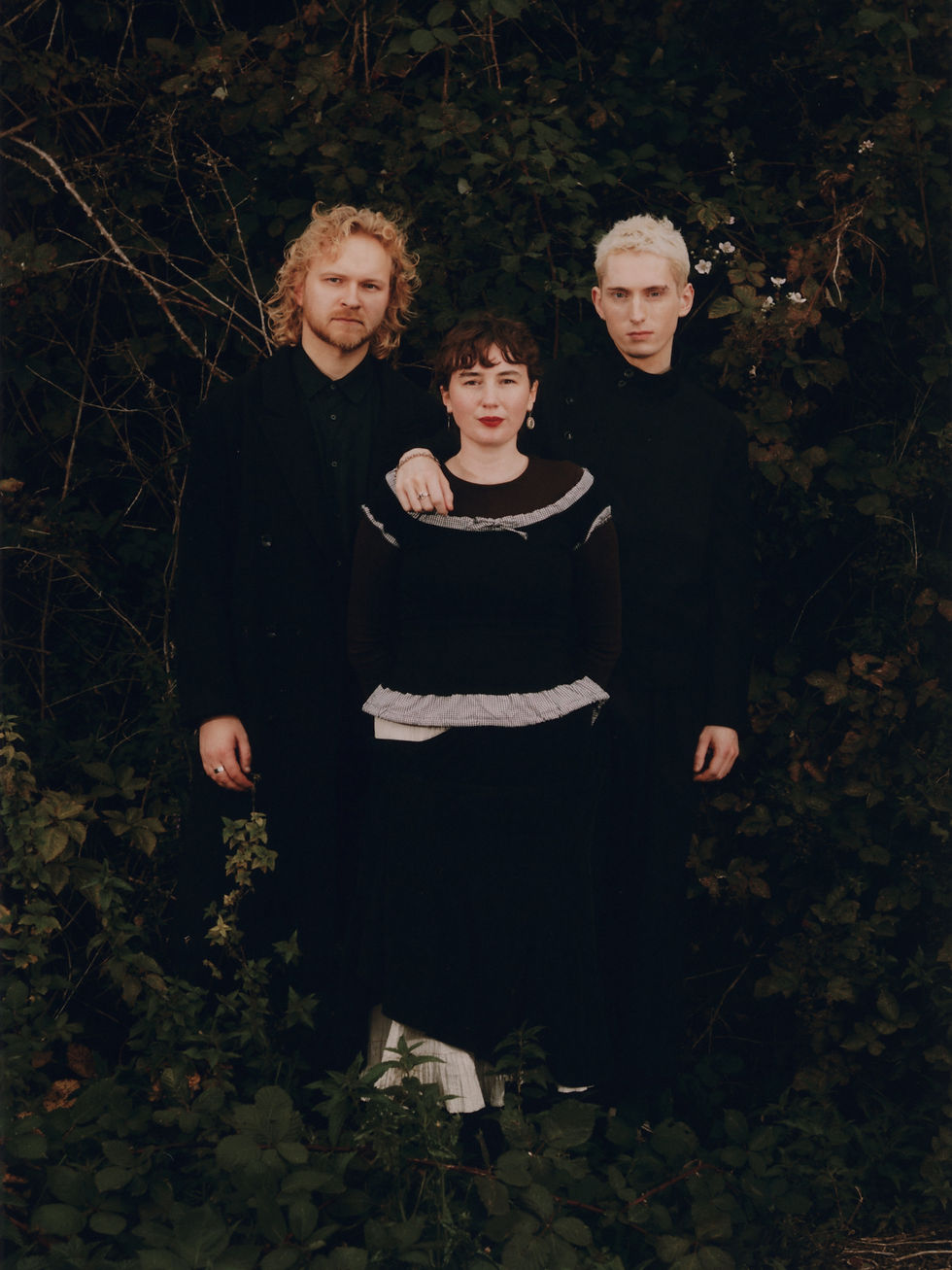
Back to that night in January—it was immediately clear that I had stumbled onto something special. Now, just over a year later, that lightning-in-a-bottle moment has grown into a real breakthrough: a signing to the legendary Bella Union and the arrival of their debut album, Birding.
Birding is a deeply intimate record, but it doesn’t just look inward. It grapples with the weight of “human consequences”—ranging from grief and anxiety to the urgent realities of climate change and violence against women. It’s a record that balances the fragile beauty of the natural world against the heavy, often crushing experience of being alive within it.
We sat down with deary for a deep dive into the new album, including an exclusive track-by-track breakdown that reveals just how personal—and how vulnerable—this work really is.
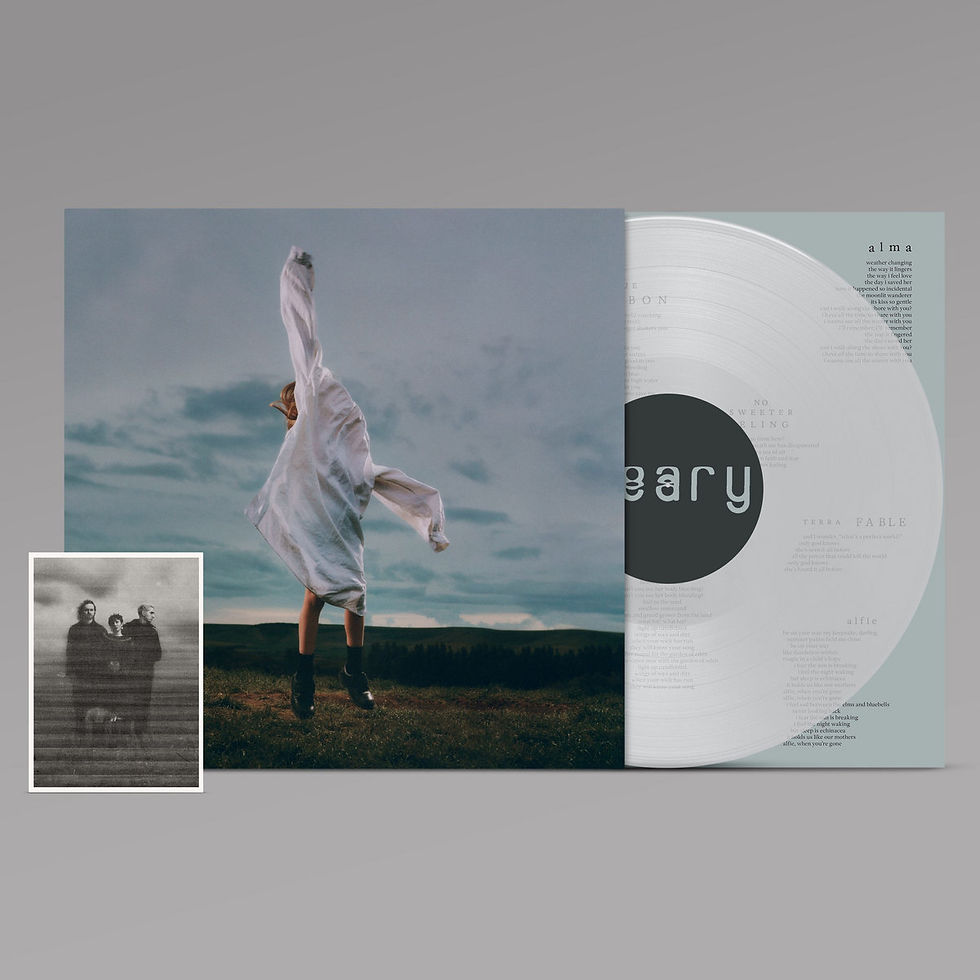
To start with Birding—this feels like a defining moment for the band. You’ve said that your earlier work was “trying to be deary,” while this album is you being deary. What changed in that transition?
Dottie: We’re more confident as musicians but also in what we wanted to create. We were more explorative and open to expanding our sound world.
Ben: I think that’s it; we went into the album sessions with more intent and confidence in what we do. Even if we had a long day and things weren’t going right, we knew we’d get it eventually!
There’s a strong duality in the imagery you described about the new album—birds as symbols of both hope and death, beauty and fragility. What drew you to that symbolism, and how does it reflect the emotional core of the record?
Dottie: I recently moved to the coast after living in London for 7 years. I reconnected with my love for stillness and nature. I began watching the birds and reflecting on our connection to them within stories and prophecies and old wives' tales. We see them as glorious, elegant creatures, but they are just animals. The oldest ones around and have as much darkness as they do light.
The album revolves around the idea of “human consequences”—on ourselves, on others, and on nature. When did that theme first emerge for you, and did it shape the songwriting from the beginning or reveal itself later?
Ben: I ended up spending a lot of time on my own because of a new job and new house, and ended up taking a lot more of an interest in how humans interact with each other whilst people watching. Similarly, I ended up doomscrolling pretty much every day and was overwhelmed by the horrible news and events that seemed never ending. So I was pretty overloaded, and luckily some music started to flow out as a result of that.
Lyrically, your work often feels very internal. On Birding, are you writing more from personal experience, or are you stepping into characters or imagined perspectives?
Dottie: I am quite an internal writer. I have enjoyed exploring characters and stories in some of our previous songs and I think some of the greatest songs ever written do that too. With this record, I am mostly writing from myself. There’s a lot of reflection and personal experience weaved into each song. Some involve characters like our ol’ wise seagull in Seabird and candlebird in Garden of Eden, which helped me open up the direction of the songs.
Compared to your earlier releases, Birding feels more cohesive and intentional. What did you do differently this time in terms of songwriting and structure?
Dottie: Hmm, I'm not sure we did directly do anything different. I think we are just different. Our lives looked quite different then, and we just feel more inspired and locked in than ever.
Harry: We had a couple discussions before about what directions we wanted to go in, trying to incorporate all of our separate and shared interests. I think there’s a big range of ideas that I’m glad we were able to hit like our folkier side or our love for trip hop rhythm.
If you had to describe the album through a single visual scene—like a still frame—what would it look like? What is one song on Birding that feels especially personal or defining for you, and why?
Dottie: My still frame would be a candle made in the shape of a hummingbird and it would be distorted and half melted. This is an image I had in my mind when writing Garden of Eden. This song is special to me as I feel really strongly about climate change and the impact that greed has had on our world.
Harry: There’s a scene at the end of the Alfie video done by our good friend Limb with all these blue waves oscillating and that’s honestly what the album sounds like to me.
Are there any unexpected influences—outside of music—that shaped this album? (Literature, film, routines, habits, etc.)
Dottie: I love poetry and found a lot of influence and comfort in ‘The Poetry of Birds’ which is a collection of poems collected by Simon Armitage and Tim Dee. Leonard Cohen’s ‘Book of Longing’ is always next to me too.
Harry: I was really into Lynch films around that time and had a big obsession with the Angelo Badalamenti soundtracks and Julee Cruise; the aesthetic direction of the films had a big impact.
Could you walk us through Birding track by track and briefly share the idea, feeling, or story behind each song?
Smile
Dottie: I wrote this song just after it was declared by the British government that there is a national emergency of violence against women. I was devastated and felt kind of numb in a way. Every woman I know has experienced some form of assault and it’s completely exhausting. It’s commonly looked upon by women to solve this issue but that is completely un-useful and dire. I needed to write about this.
Seabird
Dottie: ‘Seabird’ is my ode to my local seagulls. Often frowned upon and disliked, I think they are resilient and powerful. This is my conversation with them.
Ben: Birds are incredible metaphors and symbols for human experience. I see the track as a sort of fable; an omnipotent bird flying overhead, seeing both the good and bad in the world, and reporting back to someone on the ground, desperate for answers and reassurance.
Baby’s Breath
Ben: I had a bad mental health episode after my 31st birthday so my doctor prescribed me with some pills to manage anxiety and depression. She advised it would take three weeks to kick in. I have a demo of ‘Baby’s Breath’ dated exactly 3 weeks after that appointment. For whatever reason, it’s probably the most organic song I’ve ever written; no massive changes or alterations since I sat down to write it. Lyrically, it’s an attempt at understanding my mental health and how difficult it can sometimes be to reach out as a man.
Gypsophila
Ben: Off the back of ‘Baby’s Breath’, I started messing around with the chords and found ‘Gypsophila’, a short ambient piece which was basically an exercise in writing feelings directly into music. Everything breathes in and out, repeatedly; the invasive high squeals, Dottie’s soothing ‘its coming back’ line and the swallowing low subs all equate to the musical representation of a panic attack.
Blue Ribbon
Dottie: Blue Ribbon started as a Jeff Buckley inspired riff that I sent to Ben. It took us a few months to find its place. I remember Ben and I sat in the studio discussing our disappointment in the political landscape of the UK and this song came out of that.
Garden of Eden
Dottie: This song is in CGCFAE. One of my favourite tunings! Alternative tunings help me break free from general chords and explore more melodies and speeds as I don't have to think too much about structures. When I think of this song, I think of the birds who have been disrupted and killed from our human greed.
Alma
Dottie: This one is a love song to my younger self.
Ben: ‘Alma’ is a very important song to us. We brought it into the ‘Aurelia’ sessions but it just hadn’t gestated properly. It was too busy and heavy. It needed a different approach and, well into the album sessions, we decided that it was time to give it some overdue attention. It came together with a happy drum-related accident.
No Sweeter Feeling
Trip hop remains a huge influence on us and we wanted ‘No Sweeter Feeling’ to enter a similar space with sampled strings, chimes and general strangeness. It was the last song on the record to be finished, and I’m glad we saved this for last as it has a real potency, despite being a shorter number. Dottie is really transcendent in this one.
Terra Fable
Harry: This track went through a bunch of versions but I remember us chatting before about exploring the idea of it not exploding into a massive wall of noise and instead sort of floating and resolving in its own different way which made us be pretty conscious about how we layered and wrote the parts.
Alfie
Dottie: This was one of the first songs we finished for the album. I jokingly sang the chorus line ‘Alfie, when you’re gone’ as an ode to a dog that Ben had been looking after. It was a placement vocal for the melody but it just became the perfect representation of loss and those moments of realising your childhood has slipped away.
Now that Birding is out in the world, what do you hope listeners feel when they sit with it from start to finish?
Dottie: I hope they feel a sense of escapism. To really drown in the music and get lost in it. But also be aware of the context and realities of the world. One foot in and one foot out.
Harry: I hope they have a pair of their favourite headphones and that the world stands still for a bit for once.
Ben: I feel liberated by the fact that it’s our record but it’s for other people now. So if anyone finds something they like, or a bit of solace in there - then that’s great.
Finally, if you could write a message in a bottle today—one meant for your future selves to find in five years—what would it say?
Dottie: Hey Dot’s, wherever you are, I hope you’re happy. I’m proud of you.
Harry: Harry, remember where you were five years before you wrote this and take a second slow down!
Ben: Keep writing!


Comments